- عربي
- 中文
- English
- Français
- Русский
- Español


JIU marks 60 years of independent oversight with high-level discussion on turning recommendations into results
Geneva | 4 November 2026
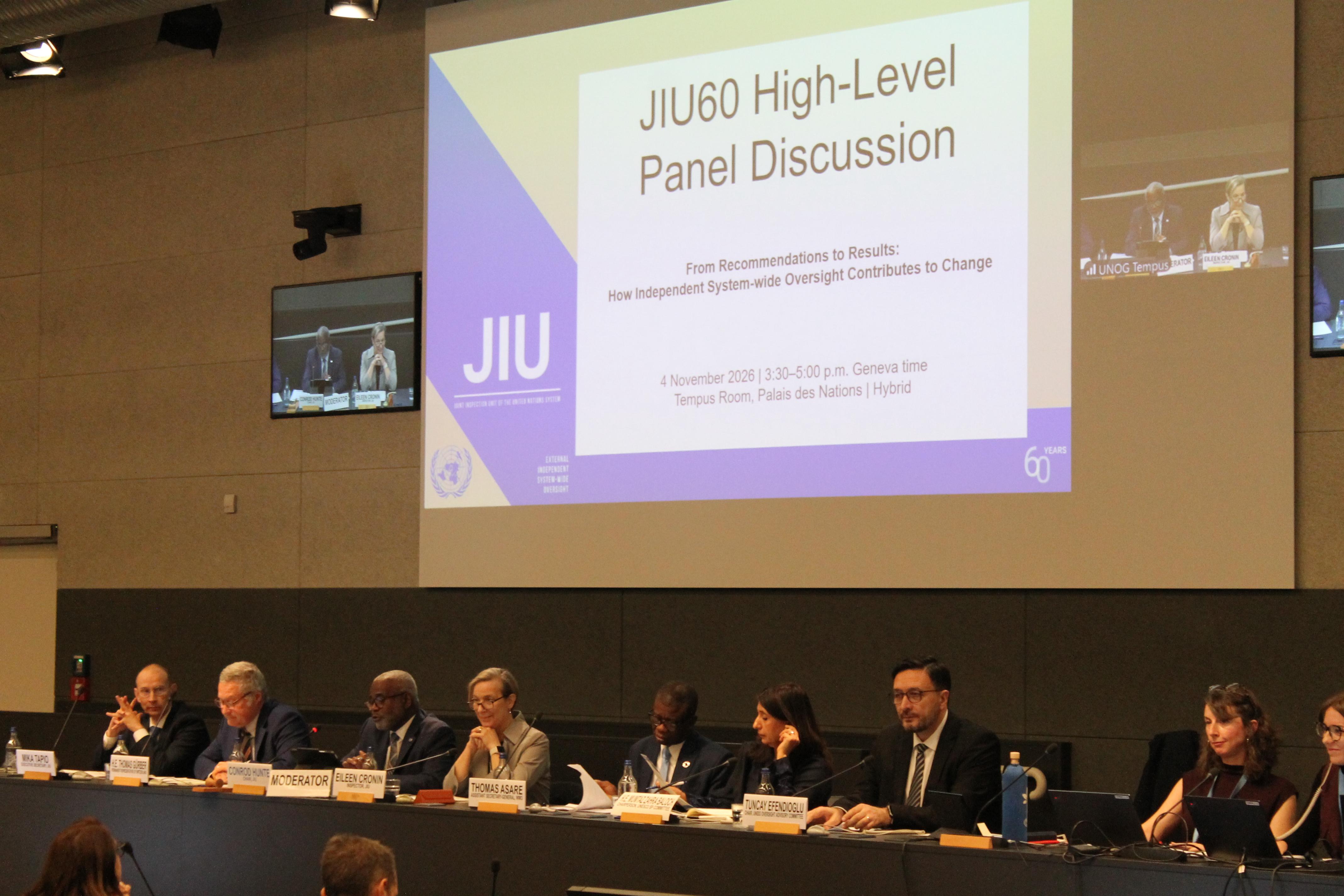
On 4 November 2026, the Joint Inspection Unit of the United Nations System (JIU) marked its 60th anniversary with a high-level panel discussion entitled “From Recommendations to Results: How Independent System-wide Oversight Contributes to Change.” The event brought together representatives of Member States, governing bodies, executive management and the oversight community to reflect on how JIU recommendations can translate into meaningful and lasting institutional improvements.
The discussion, moderated by JIU Chair Conrod Hunte, examined a central question: What does it take to move beyond the formal acceptance and implementation of recommendations to achieve sustainable organizational change?
The event featured a recorded anniversary message from the President of the United Nations General Assembly, who underscored the importance of independent scrutiny, particularly at a time of financial pressures and institutional reform. He called for stronger Member State ownership, clearer responsibilities and greater attention to the results of oversight recommendations.
The panel brought together five perspectives: JIU Inspector Eileen A. Cronin; Assistant Secretary-General Thomas Asare of the World Meteorological Organization (WMO); Ambassador Mumtaz Zahra Baloch, representing the governing-body perspective of UNESCO as Chairperson of the Special Committee of the UNESCO Executive Board; Ambassador Thomas Gürber, Permanent Representative of Switzerland; and Tuncay Efendioglu, Chair of UNIDO's Independent Oversight Advisory Committee.
From implementation to lasting institutional change
A central message emerged from the discussion: the effectiveness of JIU cannot be measured solely by the number of recommendations accepted or reported as implemented. Its ultimate value lies in whether those recommendations address underlying weaknesses, improve institutional practices and produce sustainable results.
Inspector Cronin emphasized that meaningful change often requires deliberate adjustments to organizational culture, policies or working methods. Drawing on JIU reviews concerning whistleblower protection, investigations and ethics, she illustrated how recommendations can contribute to important reforms that take several years to materialize.
The discussion highlighted the importance of timing and institutional readiness. Experiences from WMO and UNESCO demonstrated how JIU management and administration reviews can provide a framework for reform, particularly during leadership transitions.
At WMO, Thomas Asare described how JIU findings helped bring strategic management issues to the attention of governing bodies and supported improvements in human resources strategy, internal controls, accountability, risk management and cybersecurity.
At UNESCO, Ambassador Baloch explained how the recent JIU review informed ongoing reform efforts, while highlighting the importance of cooperation between the UNESCO Secretariat and governing bodies, clear allocation of responsibilities and systematic monitoring of implementation.
Member State ownership is essential to turning recommendations into action
One of the strongest recurring messages was the need for Member States and governing bodies to assume greater responsibility for considering, prioritizing and following up on JIU recommendations, particularly those addressed directly to governing bodies and legislative organs.
Ambassador Gürber emphasized the importance of governing-body ownership, early engagement with management and stronger accountability for non-implementation. He also highlighted the particular value of independent, evidence-based oversight in the context of the UN80 reform agenda and current resource constraints.
Panellists stressed that governing bodies should keep significant recommendations on their agendas, request regular implementation updates and ensure that management establishes clear action plans.
The discussion also challenged the JIU to further strengthen the strategic focus, clarity and practical applicability of its recommendations, taking account of the diverse mandates and governance arrangements of participating organizations.
Strengthening follow-up, accountability and evidence of results
The panel identified clear responsibilities, realistic timelines, measurable indicators and sustained follow-up as essential conditions for translating recommendations into results.
Tuncay Efendioglu highlighted the contribution of oversight advisory committees in supporting management action plans, prioritizing recommendations and verifying implementation. He also emphasized the importance of maintaining institutional memory across successive governing-body sessions and leadership changes.
Panellists discussed opportunities for stronger coordination between JIU, internal oversight and external audit mechanisms to avoid duplication and facilitate collective action on system-wide recommendations.
The event also highlighted the JIU's modernized Recommendation Tracking System (RTS), which provides information on the acceptance and implementation status of recommendations across participating organizations.
Looking ahead, Inspector Cronin noted that the JIU had initiated a review examining the outcomes of its recommendations, with a view to identifying lessons learned and good practices.
JIU oversight matters more than ever
Against the backdrop of UN reform, financial constraints and accelerating institutional change, the discussion reaffirmed the continuing relevance of the JIU's independent, system-wide mandate.
Panellists emphasized that credible comparative evidence, practical recommendations and stronger coordination can support informed decision-making and help organizations identify opportunities for improvement.
The ultimate purpose of oversight, they stressed, extends beyond administrative compliance or cost reduction: it is to help United Nations organizations deliver more effectively on their mandates and achieve better results for the people they serve.
As the JIU enters its seventh decade, the discussion reinforced a shared responsibility: JIU oversight provides the evidence and recommendations, but Member States, governing bodies and executive management must translate them into decisions, action and lasting improvements.
Watch the discussion and explore the anniversary resources
The event recording and related materials are available through the JIU's anniversary resources
• Watch the full panel discussion - includes the recorded message from the President of the General Assembly.
• JIU60 anniversary webpage - the central resource for anniversary events, articles and publications.
• Original event announcement - background on the objectives and participants.
The event was organized with the generous support of the Permanent Missions of Belgium, Japan, Sweden and Switzerland.